


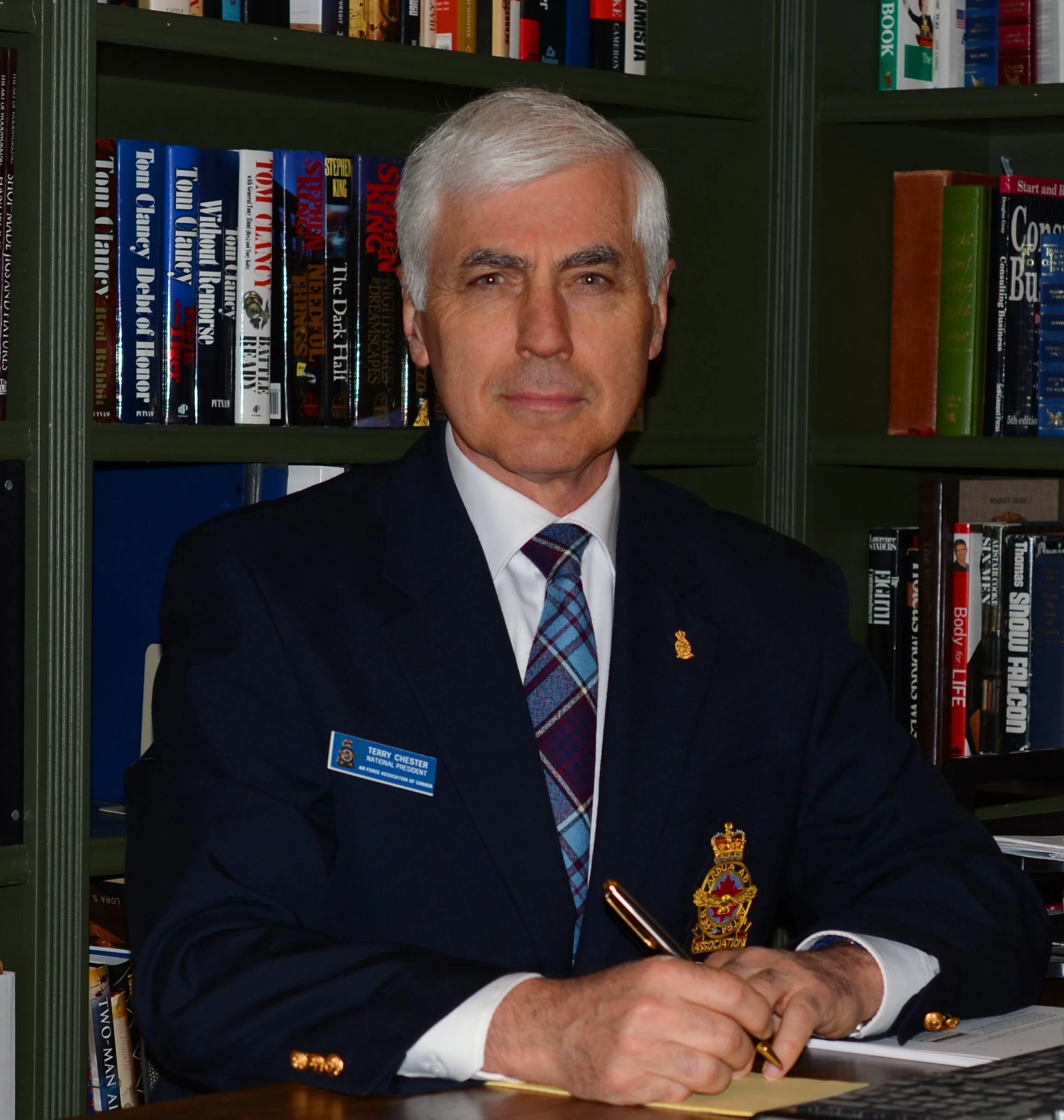
Colonel (Ret.) Terry Chester
Chairman, Board Of Directors Royal Canadian Air Force Association
I express my organization’s wholehearted support for the Bomber Command Museum’s Expansion Program, currently underway in Nanton, Alberta. The Royal Canadian Air Force Association (RCAFA) has been a long-time admirer of the remarkable work and dedication to preserving aviation history that is carried out in Nanton by these enthusiastic volunteers.
I have had the incredible privilege of witnessing the passion and expertise of this organization firsthand. Their commitment to restoring vintage aircraft and maintaining them to the highest standards is truly exceptional. They have consistently demonstrated their ability to preserve aviation history for future generations, fostering a deep appreciation for the heritage of Canadian aviation and the people that made it possible.
The construction of a new hangar is a crucial step for the organization, as it will provide the necessary space and resources to further their magnificent restoration efforts. This expansion will not only enhance their capabilities but also allow them to reach a wider audience, both locally and internationally, through educational programs and exhibits.
We strongly recommend that organizations provide strong backing and assistance to this most worthy project, as Nanton’s mission dovetails almost completely with the goals and objectives of the RCAFA, a leading voice in the preservation of Canada’s aviation heritage.
Sincerely,
Colonel (Ret) Terry Chester, CD

Robert J. Hawkes, KC
Partner, JSS Barristers
Funding for the construction of a NEW memorial heavy bomber hangar in Nanton, Alberta is an investment in education, culture, tourism, and community engagement for generations to come in memory of our WW2 veterans.
My father, V.L. (Doug) Hawkes, was born in Calgary, was a combat Halifax bomber pilot in the RCAF and joined 419 Squadron in November 1943. He was shot down over Germany in 1944 and became a Prisoner of War until his 29th birthday on May 17, 1945.
While a prisoner in Germany, the Canadian and British Red Cross kept him in reasonably good health. Somebody cared. Doug never forgot their generosity. It was this act of humanity and generosity during his war experience that Doug, along with Grant MacEwan and Edward Bredin, felt compelled to start The Calgary Foundation. If not for the Foresight and Initiative of a few, The Calgary Foundation would not be the success it is today.
Funding the construction of a new bomber hangar, “Home for the Heavies,” for these RCAF Halifax and Lancaster bombers can be justified for several compelling reasons:
1. Historical Significance: The Halifaxes and Lancasters of the Royal Canadian Air Force played a crucial role during World War II and they are an important part of Canada's military history. Reconstructing and actual running these aircraft will provide a living and tangible link to the past, helping to preserve and commemorate the great sacrifices made by Canadian RCAF men and women during the war.
2. Educational Value: A restored Halifax and Lancaster in new dedicated display hangar can serve as an invaluable educational resource. It can be used to educate current and future generations about the history of aviation, the role of Canada and the RCAF in World War II, and the technology and innovation of that era.
3. Museum and Tourist Attraction: These heavy bombers of the RCAF can be the unique centerpiece museum attraction that will be the draw for huge numbers of visitors and tourists, boosting local, regional, and provincial economies through increased tourism revenue. Major gatherings of up to 1,000 people could be conducted in this same facility housing these famous bomber aircraft.
4. Veterans' Legacy: Honoring the legacy of veterans is essential to Canada’s present and future. Many veterans along with their families will take pride in the restoration project and find it meaningful. It can serve as a living and lasting tribute to those who served in the RCAF during World War II.
5. STEM Education: Such a historic and detailed restoration project, spotlighted on the rare Halifax heavy bomber bomber, can also serve as a platform for STEM (Science, Technology, Engineering, and Mathematics) education. Students and researchers can study the aircraft's design, engineering, and technology, promoting interest in these fields.
6. Preservation of Aviation Heritage: By funding the construction of a dedicated hangar for both the Halifax and Lancaster bomber, you're ensuring the preservation of an iconic symbols of aviation heritage. Without proper facilities, historic aircraft can deteriorate and become lost to time.
7. Cultural and National Identity: The Lancaster, and even more so the Halifax bomber, are both a part of Canada's cultural and national identity. Supporting the museum and their bomber displays demonstrates a commitment to preserving and celebrating Canadian history and achievements.
8. A Source of Inspiration: Projects like these can inspire future generations to pursue careers in aviation, engineering, or military service. It can showcase what can be achieved through determination, teamwork, and innovation.
9. Collaboration and Community Involvement: Such a project can bring together the community, veterans, aviation enthusiasts, and experts, fostering collaboration and a sense of pride in achieving a common goal.
10 Economic Benefits: Beyond tourism revenue, the construction of a bomber hangar and the associated reconstruction project can create jobs, stimulate the local economy, and support the aerospace industry.
The construction of a new bomber hangar, this “Home for the Heavies” for these RCAF Halifax and Lancaster bombers is more than just a historical endeavor; it's an investment in education, culture, tourism, and community engagement. It preserves Canada's history and can provide numerous benefits to the local and national community, making it a compelling and worthwhile endeavor.
Respectfully yours,
Robert Hawkes